Anti-Fungal & Anti-Algae Coatings: The Need for India’s Humid Climate
India’s climate is a unique mix of heat, humidity, heavy monsoons, and long dry spells.
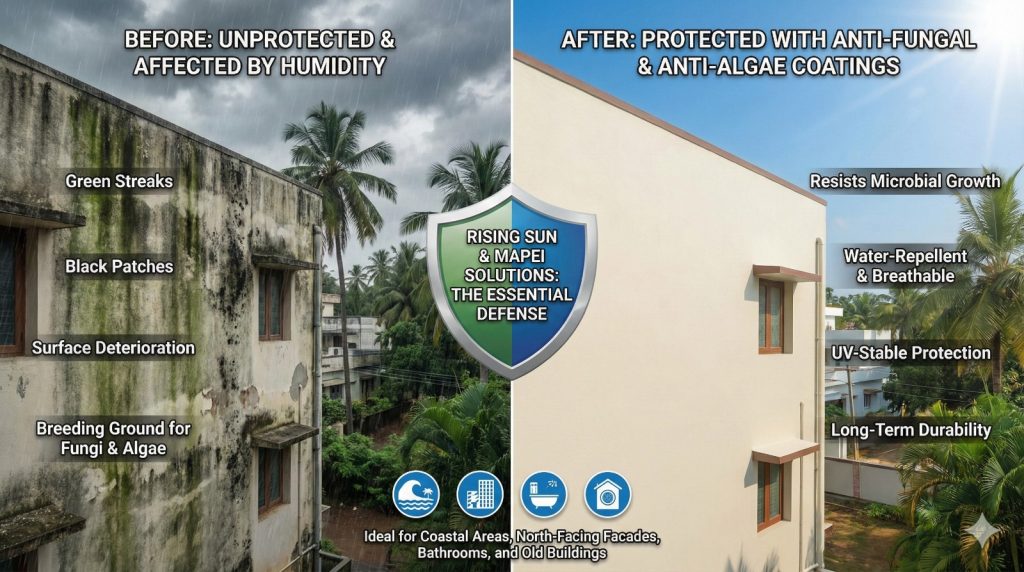
And while this climate supports rich greenery, it also creates the perfect environment for fungal growth, algae deposits, black patches, and surface deterioration—especially on exterior walls.
If you’ve ever noticed greenish stains on building facades or black patches inside bathrooms, you’ve already seen the early stages of fungal or algal attack.
The solution?
Anti-fungal and anti-algae coatings — designed to protect buildings precisely from India’s moisture-driven threats.
Why Do Indian Buildings Need These Coatings?
Humidity is the biggest culprit.
In areas like Pune, Mumbai, Kerala, Chennai, Kolkata, and the North-East, humidity stays high almost throughout the year.
Here’s what this moisture does:
1. Creates a breeding ground for fungi & algae
Even a small amount of retained moisture on walls can trigger rapid microbial growth.
2. Weakens the building’s aesthetics
Green streaks, black dots, and patches instantly age a building — affecting both appearance and property value.
3. Damages the surface over time
Fungus and algae eat into the paint layer, degrade plaster, and cause early deterioration.
4. Increases maintenance cost
Regular repainting becomes necessary every monsoon if the root cause isn’t addressed.
This is where anti-fungal and anti-algae coatings show their true value.
How Anti-Fungal & Anti-Algae Coatings Work
These coatings are not just regular paints. They include:
✔ Special additives that resist microbial growth
They prevent spores from settling and multiplying on the surface.
✔ Water-repellent yet breathable layers
This prevents moisture retention while allowing the wall to breathe.
✔ UV-stable protection
They withstand India’s harsh sun without breaking down.
✔ Long-term durability
They keep both interior and exterior walls clean, healthy, and stain-free.
For example, MAPEI’s elastomeric and silicone-modified coatings (such as Elastocolor Tonachino Plus and Silancolor systems) provide:
- Crack-bridging ability
- Breathability
- Anti-fungal technology
- Weather resistance
This makes them ideal for India’s climate.
Where These Coatings Matter the Most
These coatings are essential in:
• Coastal areas
High salt content + moisture = rapid fungal attack.
• North-facing facades
These walls receive minimal sunlight and stay damp longer.
• Bathrooms & wet areas
Frequent usage makes them hotbeds for mould.
• Schools, hospitals, residential societies
Where hygiene and clean surfaces are crucial.
• Old buildings
Where moisture seepage is common.
No matter the project — from a home to a high-rise — microbial-resistant coatings help maintain stronger, healthier structures.
Common Mistakes People Make
Even the best coating fails when:
- The surface isn’t cleaned properly
- Existing fungus isn’t removed first
- Walls are damp or leaking
- Only “paint” is applied instead of a system
Proper preparation + the right coating = long-term protection.
Why Builders & Architects Are Moving Toward These Coatings
Because they offer real, measurable advantages:
- Lower repainting frequency
- Better hygiene
- Enhanced facade life
- Reduced complaints from homeowners
- Improved building appearance
- Protection in unpredictable climate conditions
In short, they offer strong ROI and fewer maintenance issues.
How Rising Sun Helps
Rising Sun brings MAPEI’s advanced coating systems to Indian projects with:
- Expert product selection
- On-site surface inspection
- Correct surface preparation guidance
- Application support
- Long-term performance assurance
With the right system, surfaces remain clean, durable, and resistant — even in harsh monsoon conditions.
Final Thoughts
India’s humidity isn’t going away.
But fungus, algae, stains, and patchy walls can — with the right protective coatings.
Anti-fungal and anti-algae systems are no longer option
About us
We are Rising Sun - a notable brand in the field of construction chemicals. We are authorized distributors for Mapei Construction Chemicals with expertise in providing end-to-end solutions for construction processes including advising to execution.
Contact us
- 8237867922
- info@risingsungroup.co.in
- City Avenue, office no 110, Bhumkar chowk, Wakad Pune 411057